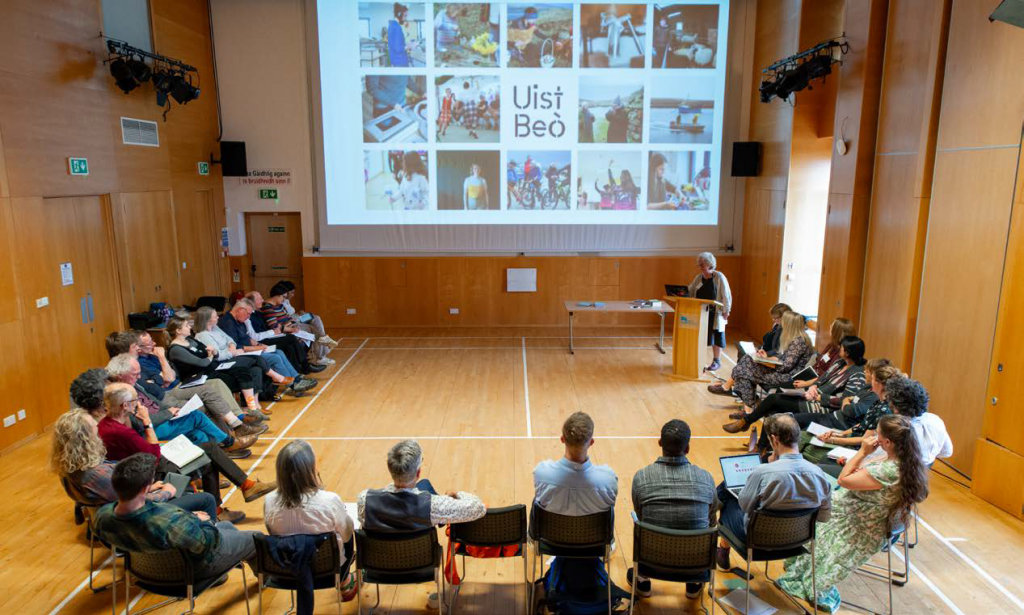
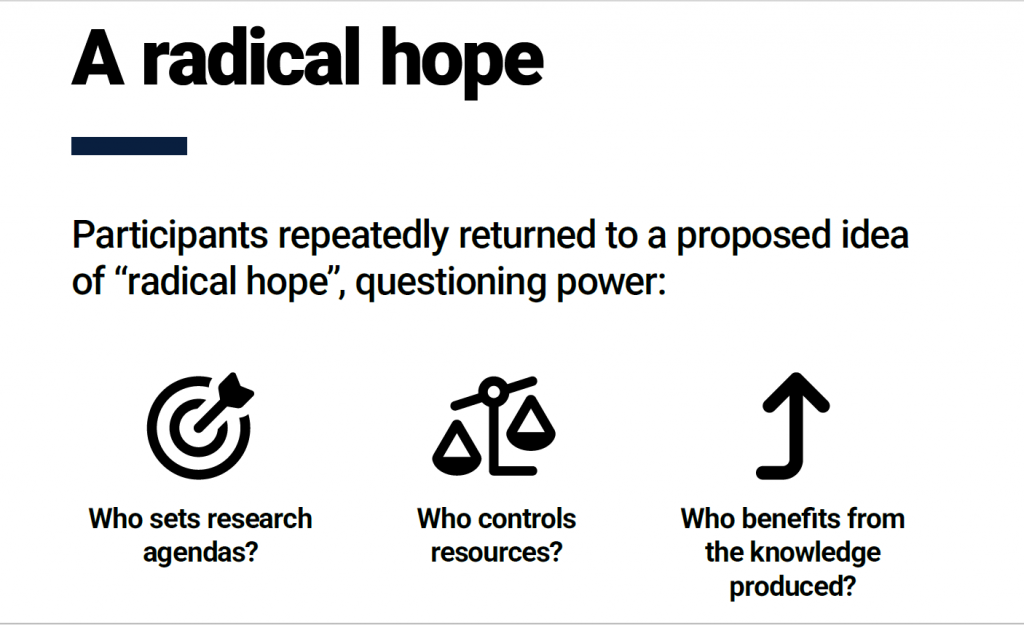
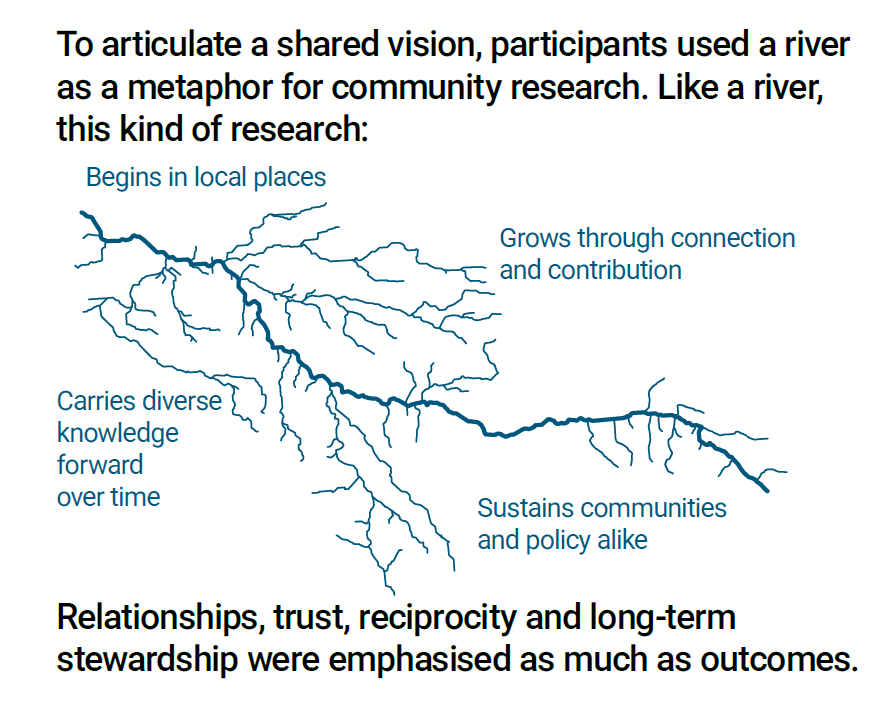
“Policymaking in parts of Scotland has not led to a transformative change in the realities of rural and island life”, according to participants at an event in Skye last autumn. The report from the event, released this week by the Royal Society of Edinburgh and CoDeL, seeks to provide answers as to why, and what could bring about genuine change, focusing on the role of research that underpins policymaking.
The report urges policymakers, funders, and research institutions to better recognise, resource and support the knowledge already held within communities. Communities are repositories of ancestral and modern knowledge shaped by lived experience and inherited understanding.
Gathering at Sabhal Mòr Ostaig, the Gàidhlig college in the Isle of Skye mattered as a location. Being immersed in a place rooted in language, culture, and local knowledge shaped how people listened, spoke, and thought – reinforcing the idea that where research happens shapes what research becomes.
The report is available here and on the RSE website here. A ‘story’ overview of the process and key findings is here.
Co-designing and co-delivering research with communities gives access to vital evidence on the ground, often missed by standard external research methodologies. So genuine partnership with communities provides a better evidence base, higher quality research outcomes and, hence, better policy recommendations. Moverover, because communities are at the core of such research, they can contribute to implementing recommendations, enhancing the impacts of research and policy.
Superior evidence, better recommendations, greater impacts.
Community‑rooted research starts from recognising communities as knowledge holders. It responds directly to needs identified by communities themselves. It is embedded in local action, culture, history and place. It values lived, inherited, and embodied knowledge, including stories, language, memory, art, and creative practice, alongside more conventional research methods.
“Research embedded in reciprocal relations embraces such local knowledge(s), experience, and understanding of community culture, recognising and valuing that communities are “brimming with insights, skills, experiences, ambitions.” Research must thus be grounded in a deep understanding of language and culture in close-knit communities, as well as of community needs and aspirations.”
Crucially, community-rooted research is owned, shaped and accountable to communities.
To thrive, this kind of research needs supportive structures. Funding models should empower communities to define research agendas, deliver research, and control the narratives about their own contexts.
Two concepts at the core of our thinking are how extractive research methodologies can be (“communities have long experienced research and policy collecting data about them rather than knowledge created with them.”) and how powerful external language and frameworks can be in excluding and distorting local voices.
“Participants emphasised the need to ground different types of research in deep reciprocity and respect for communities to ensure research is collaborative rather than extractive. Rather than being filtered or interpreted through externally designed frameworks and language alien to communities and their deeply held cultural knowledge, community-rooted research draws on the knowledge and voices of local people, and is already changing narratives and influencing policy, from local to national.”
“Research should not seek to frame deeply held cultural knowledge within a generic linguistic framework used in research institutions, that is often alien to those from communities participating in the research.”
Genuine partnerships of equality in research must be based on deep reciprocity and respect. And they must involve the sharing of financial resources, rather than the failed and extractive approaches of “community consultation” and “community engagement”.
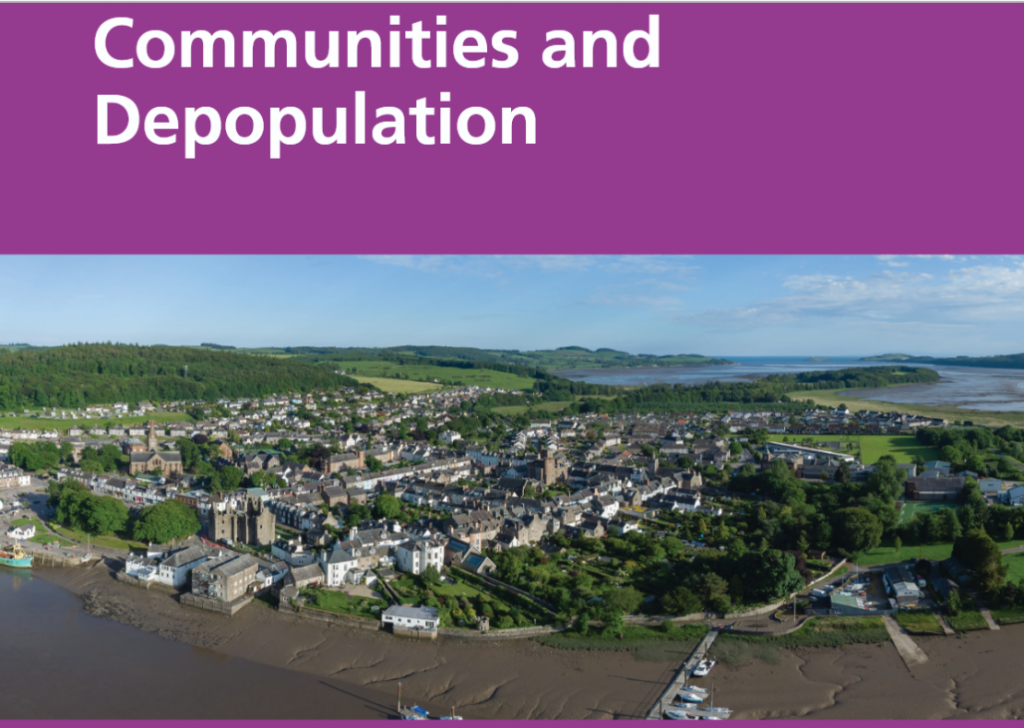
Our reports on addressing rural depopulation in Dumfries and Galloway (D&G), commissioned by the local authority, are now available. Read here for all the detailed analysis and many diverse casestudies from D&G, Scotland and Europe. And, from p.67 of the report, you can find the highlights, conclusions and above all 26 recommendations that could collectively achieve rural repopulation within the region.
“What a robust and detailed body of work – chapeau! It makes for compelling reading.” (Andrew McConnell, Chief Executive of the Glenkens Community and Arts Trust).
The authors, Thomas Fisher and Theona Morrison, write that “three clear conclusions on interventions emerged from the research. First, it is possible, however challenging, to halt and even reverse rural depopulation, as demonstrated by areas across Europe (e.g. in Catalonia) and in Scotland, for example in some Scottish islands and some places in D&G itself, where some small towns in the east of the region, as well as Gatehouse of Fleet and Sandhead have experienced population growth.
“We also identified specific groups that are contributing to sustaining rural populations, like young farmers returning to their family farms, engaging in food production and often also working in key services like health and education, and so-called “Alternative-Lifers”, who have long been moving into the region, often with young families, who have boosted local population, enterprise and community activity.
“Second, there are a plethora of potential interventions to address depopulation within D&G, and we highlight many of these in the report. And, third, these strategies can build on the many assets, strengths and good practices already within the region.”
“It is also important to highlight the reasons for investing resources to retain and attract population to rural areas in D&G. First, the region is almost entirely rural, and rural people have the same rights to live well as citizens anywhere else. Second, according to the OECD, “rural regions and the people who live in them, are the source of almost all the food, fresh water, energy, minerals and other resources that make our way of life possible”. D&G is a key contributor to Scotland’s larder (e.g. with 25% of Scotland’s cattle herd), and rural people are key to regenerating that land to achieve more sustainable, regenerative, and local food production. Rural communities remain the custodians of much of the world’s biodiversity, and of related understanding and cultural assets critical for our survival, amidst the twin climate and biodiversity emergencies. Finally, there is the economic contribution of rural areas. On top of all the resources listed above, rural areas accounted for most of the firm-level productivity growth in Scotland from 2010 to 2018, according to the OECD. In fact, remote areas alone accounted for 81.6% of total productivity growth!”
Rural communities must be at the heart of any actions and policy for rural repopulation, and the report, by University of the West of Scotland and CoDeL, based on extensive engagement with three communities in D&G, is here. The three communities were the Glenkens (“remote” rural), Newton Stewart (rural town) and the Rhins (coastal). The report focuses in particular on the role of family and community relations as key to shaping young people’s positive perceptions of rural living, and calls for addressing inequalities in accessing key services in rural places through more holistic approaches.
Today we are sharing the findings from our research on addressing rural depopulation in Dumfries and Galloway with Elected Members in D&G Council, that commissioned the research. Our Briefing Paper and full report, which will both be available later this week, are full of analysis, casestudies, and 26 recommendations. There is so much we could highlight.
The contributions of young researchers in D&G to the research. A big thank you to Hayley McGaw for casestudies and analysis from Scotland and Europe, to Charlotte Nash for surveying young farmers across the region, to Korey Patterson for engaging young people, to Cameron Inglis for interviewing people in the Rhins, as well as Mary Mitchell who reached out so effectively to “Alternative Lifers”.
The overall conclusion that rural repopulation is possible, and that there are many examples of this, from within Dumfries and Galloway itself, in Scotland and across Europe.
Our call to change the narrative on rural living, in particular highlighting young people who are making a good life for themselves in rural communities.
And our call to significantly enhance the returns to local communities from the many, many assets they steward that make modern life for us all at all possible. Dramatic rural revitalisation would easily be possible if rural and island communities enjoyed just returns on these assets, rather than the value and profit (for example from the renewable energy, forestry and carbon sectors), being extracted by external parties.
On October 20-23, over 400 rural delegates from over 40 European countries gathered in Inverurie in the north-east of Scotland for the 6th European Rural Parliament (ERP), a participative democratic assembly that shines a spotlight on the power of rural communities to respond to global crises (see here for a fuller version of this blogpost).
It isn’t that communities lack capacity for change; they lack the support to deliver. This is the message behind the Inverurie Declaration, a call for systemic change from the delegates that asks not for help but for partnership from European, national and regional authorities. Theona L Morrison, Chair of Scottish Rural Action and Director of CoDeL, shares her reflections on the 6th ERP.
In Scotland, 98% of the land is defined as rural with over 90 inhabited islands all of which is home to just 17% of the population.
Many of us attend gatherings to discuss policy, service delivery and other aspects of life and find it is often filtered through an urban lens, because that’s where the population density – dare I say voters – are living.
Rural is often profiled as being remote from ‘the centre’, at worst backward in time, needing to catch up with urban centres, whilst at best wild places of beauty to escape to, to switch off and ‘visit’. When for those of us who live and work in rural and island places, we hold the keys to the future, the front line to address climate change, food, energy and water production/ security, in short those things that sustain life.
The natural assets which sustain human life may be sourced even extracted from rural areas, but they need people and communities living in rural and island places to power the production of these assets.
People from communities came to the ERP. They came in their wonderful diversity of knowledge and experience; they came with their fears, and pragmatism to discuss their challenges, share and craft the solutions. The synergy was palpable.
We were delighted to welcome in our company sole representatives from Ukraine and Georgia along with delegations from countries whose border security is in sharper focus than for others.
We saw the amazing work that communities are delivering on the ground. From social enterprises which address local needs – community transport, community energy, demographic changes – to local food initiatives which protect the integrity of the food and serve local communities, to women as changemakers.
Cultural expression was embedded in the ERP. The event couldn’t even start without a piper (bagpipes) leading the way! We were in the heart of Doric Scotland, with its distinctive Scots language rich with songs, music and stories. Feelings of love, hurt, injustice have long been carried by the working people – especially when they were singing about things that could not be written down!
Ellie Beaton, the Young Scottish Traditional Music Award winner for 2025, who comes from Aberdeenshire, entertained and informed as she taught us some local Doric songs and encouraged us to join in. There were songwriting workshops which culminated in a brand-new song created for ERP which we all heard and sang along.
We are young, we are old. We are one and must be bold. Learning from the past, building for the future, we pass it on. We are one, hear our song.
We danced to the music of a traditional ceilidh band The Haggis Chasers who ‘called’ the steps so that our European friends could fully participate in the most social and energetic dancing!
The key asks which emerged from all delegates at the ERP are embedded in the Inverurie Declaration. It is bold and we should all hold it up high for those who would otherwise redefine our rurality.
Rural communities know what is required; they need the support to be able to deliver what is needed to thrive, not just survive.
Today we welcome participants from across Scotland, community representatives, academics and others, to an event in Skye organised in partnership with the Royal Society of Edinburgh. The event on “Valuing local communities in research and policy-making”, at Sabhal Mòr Ostaig in Skye, will reflect on how we can create better research that truly values local knowledge, experience and voices, giving local communities much greater control and ownership. It has been inspiring to work in genuine collaboration with the Royal Society, and with the backing of the Williamson Trust, whose trustees are attending the event.
Some of the research outputs that CoDeL will be reflecting on are:
Demographic research on young people returning, settling or staying in Uist (2018), which launched CoDeL and generated significant policy debates.
2. Islands Revival Blog and Declaration (with James Hutton)
3. Young island voices in Scotland and Ireland
4. Economic Impacts of Covid on Peripheral Communities across the Northern Periphery and Arctic (from Canada to Finland, including Scotland and Ireland) (EU funded)
5. Contributions of local social enterprises to Uist
6. Close to 100 stories and reels created for Uist Beò digital platform
7. Casestudies of community action in Uist and the Glenkens
8. Review of Rural Education in the Glenkens in Dumfries and Galloway
9. Addressing Depopulation in D&G: Theme 2 on communities and Theme 3 on best interventions + overall report
The Review of Rural Education that CoDeL delivered last month for the Glenkens and District Trust continues to attract significant positive interest, from policy-makers, officials and politicians, those directly involved in the education sector, and from academics. It is also supporting significant deliberations within the Glenkens and its communities in Dumfries and Galloway. For links to the Review, see the previous blogpost on 27 November.
A very interesting and inspiring read, and seems highly relevant to the Nordic context and the EDYNORA project.
Here are examples of feedback from Prof Ken Muir (at the University of the West of Scotland and author of the Scottish Government’s report, “Putting Learners at the Centre: Towards a Future Vision for Scottish Education”) and Prof Roger Crofts (the first CEO of SNH).
Prof Ken Muir “The report makes for a very interesting read. I’m particularly impressed with the way in which the report and its Appendix captures the advantages of such programmes and incorporates a range of case studies from so many different locations. These case studies are great examples of how local curricular initiatives can offer so much of value to learners in their own context.
In fact, the manner in which these rural schools are taking advantage of curricular flexibility for the benefit of young people and their local communities is most heartening. They are very good examples of what I recommend in my report for Scottish Government, “Putting Learners at the Centre”. It is my strong view that ‘ground up’ initiatives, such as those being seen in some rural areas, have much more chance of success, and are much more beneficial for young people and their communities, than the kind of ‘top down’ initiatives we have seen over many years.”
It is a most thorough look at rural education issues and solutions across many countries including Scotland. The place-based policies are very much a geographical perspective on policymaking.
The evidence of damage to rural communities caused by school closures in rural areas does suggest that this should be a greater priority than at present, especially for the Scottish Government.
Ian Selmes
“Perhaps the most significant sentence in the report is the following on page 13: ‘What is required is a significant rebalancing of schooling that does not just focus on learning to leave, but gives rural young people genuine choice and opportunity (a) to pursue their lives, and work, locally within their community, or (b) to migrate elsewhere, whether to urban or other rural places, or (c) to pursue a mix of these options.'”
CoDeL was launched in 2018 on the back of community-rooted demographic research on 469 young people returning, settling, or staying in Uist in the Outer Hebrides, which led to the Islands Revival blog with 20 casestudies of diverse island communities that were turning the tide of depopulation. Ever since CoDeL has delivered research and policy, as well as direct action (like the digital platform Uist Beò), to enable rural and island communities to thrive, including addressing their demographic challenges.
CoDeL’s most recent research, commissioned by a community organisation, the Glenkens & District Trust (GDT) in Dumfries and Galloway, reveals that innovative approaches to rural education are vital for community sustainability (see GDT’s press release here).
The report cites evidence from the latest rigorous published research that school closures contribute to depopulation. Other key findings focus on the role that place-based education can play in sustaining local communities, and the local economy. The findings are backed by plenty of casestudies from rural and island Scotland, and elsewhere, on successful models of educational provision that have been developed to sustain rural communities in practice.
Perhaps the most significant sentence in the report is the following on page 13: “What is required is a significant rebalancing of schooling that does not just focus on learning to leave, but gives rural young people genuine choice and opportunity (a) to pursue their lives, and work, locally within their community, or (b) to migrate elsewhere, whether to urban or other rural places, or (c) to pursue a mix of these options.” (Prof Roger Crofts)
A key part of the review was engaging with communities in the Glenkens on their views. During the community sessions CoDeL facilitated a vision emerged for an educational hub at the heart of the community to deliver rural place-based learning from cradle to grave. The hub could become a centre of excellence for relevant rural skills, for example for the land-based and renewable energy sectors.
“Our research confirmed the critical role that education plays in sustaining rural populations. Evidence from the research suggests there are many proven strategies for education to help sustain and build rural communities. Combined with the passion, commitment and deep understanding of education we found within local communities, and with the Council’s priority to tackle depopulation, the research findings suggest there is a real opportunity to develop education provision in the Glenkens that is innovative and transformational.” (Theona Morrison, co-Director of CoDeL)
We wish the diverse stakeholders in the Glenkens every success in realising such a vision in practice. Certainly, the commitment and passion for education within communities in the Glenkens is beyond doubt, as is the depth of their relevant knowledge and experience, insight and aspiration.
“Engaging with ethnic minorities in a rural as compared to an urban context requires a very different approach, due to the significantly lower numbers of ethnic minority people. Additionally, as the numbers of ethnic minorities and people who come to the islands from outwith the UK are significantly proportionately lower than in urban areas, more effort in removing barriers, and a better and positive approach to inclusion needs to be created.”
One element of the Community Action in Uist and Glenkens project involved exploring Engaging minority voices in community strategies for a Just Transition in Uist¸ … how to shape an engagement process which is welcoming, open and safe for ethnic minority groups and those who have come to Uist from outwith the UK, whose voices are often not heard in the usual community engagement activities. This is not an easy or quick task, and this blog post shares some of the important reflections that have emerged from the process so far.
We explored race equality and other relevant issues at a public event, facilitated by CEMVO, bringing some 20 people from Uist together to learn, share and discuss and put forward ideas for diversity and inclusion in community engagement.
In the longer term we want to devise a guide of suitable approaches for engaging with ethnic minorities in island communities that can be used as good practice, including case studies and learning from this project.
Some challenges to standard approaches to engaging minority voices emerged. First was that of numbers, and how to ensure every participant has a sense of belonging, very critical to our island culture. The second was the historical legacy of the deep oppression of Gaelic culture within and beyond our island communities.
Uist, and the Scottish islands as a whole, has a very small proportion of people resident from ethnic minorities, about 1 per cent, compared to 4 per cent nationally in 2011. Countries of birth other than Scotland and England accounted for 5 per cent of the population on inhabited islands (8 per cent for Scotland as a whole). When engaging with the Uist community, an event which reaches 50 residents would be very successful. However, to reach a proportional number of ethnic minorities, one person from an ethnic minority would need to be present. Dealing with such low numbers makes it difficult to ensure success without directly targeting ethnic minorities and people who come to Uist from outwith the UK. It was felt such an approach is unfair to the people invited as they are being targeted because of their ethnicity, and not for what they would bring to the engagement.
“The rule of thumb to engage cross culturally in other locations seems to hinge upon improving access to target ethnic groups thereby opening the door to individuals within that group. This could be by building relationships with a group via religious venues like a mosque, or cultural centres or celebrations. This presents a unique challenge to Uist as Uist’s ethnic diversity is low compared to other islands and the mainland. For some ethnicities there are not enough people here for there to be a sense of a group who gather because of their ethnicity, and it’s potentially offensive to target an individual on the basis of a sole characteristic. The important thing is to understand the barriers to people attending, and then ensure the event is advertised in a way that everyone can understand what it is and why they should go. And the main thing is to ensure that everyone who attends feels that they are there because they are part of the community, not because of ethnicity or any demographic they may represent. There are plenty of groups that gather around activities rather than identities. Maintaining an understanding and relationship with these groups is still a way to increase access to members within those groups whereby there happens to be ethnic diversity demonstrated.”
Targeting individuals could not only be offensive, but could also be detrimental to their feeling of belonging in the community. There was a strong consensus that planning community engagement well so everyone living in Uist feels welcome by a positive feeling of belonging to our community, is what we want to achieve in our engagement. We may not be able to achieve significant numbers of engagement with ethnic minorities in Uist, or indeed any engagement at some events, however this cannot be seen as a failure. Success in engagement of ethnic minorities should therefore be measured by:
the degree to which the engagement removes barriers to engagement for ethnic minorities, and those coming to Uist from outwith the UK;
achieving welcoming engagement which promotes a sense of belonging to Uist for all.
“It is important to recognise that membership of an ethnic group is important, and valuing that difference is not a barrier to integration. Someone can fully embrace the indigenous cultures here but that should not be seen to erase who they, or their families were, prior to their story relocating here. Instead it should add to it. The essence of the days event was wanting to remove barriers to participation and it was underpinned by the belief that utilizing diversity allows both old and new perspectives to continue in sustainable ways.“
There was also consensus that, if off-island organisations are consulting the Uist community, that local community groups should be given the opportunity to conduct the sessions, in order to understand the local context and history, and to ensure a wide section of the community is reached. We are tired of externally managed consultations whose only source of information and insight comes from our own communities, but they are paid to get it from us. Any community engagement we deliver needs to be adequately resourced to ensure it reaches a diverse number of people in our community.
The second challenge emerged from the historical legacy of the oppression of Gaelic.
The participants learnt much about racism, and anti-racism, and how racism is embedded and constantly reinforced in our society, from unconscious micro-aggressions to institutional racism. We understood better how there are many dimensions of discrimination, e.g. under the Equalities Act, obviously including race, but also disability, gender, sexual orientation, age, religion and many other “protected characteristics”. We also got a sense of how discrimination can multiply, especially for those who have more than one protected characteristic. It was concerning to hear that the environmental sector is the second least diverse sector after farming: 4.8% are ethnic minority in the environmental sector compared to 12.6% across other professions. This is a challenge to everyone in the environmental movement.
The discussions at the event triggered individuals and groups. Many individuals expressed issues and in some cases hurt they had experienced themselves. The direct learning about racism needs to be there, as do all kinds of processes to challenge racism and institutional racism. Perhaps there could also be real space for processes to enable people to own their own hurt, and that of their ‘group’, and to recognise the hurt in others and other groups, and to jointly explore how to reach a point of compassionate action.
The headline for the Corrymeela Community in Northern Ireland, whose work emerged in response to the deep community conflicts, to the Troubles, in NI, says: “In our increasingly divided world, we support thousands of people from different backgrounds to live well together.” How can we live well together? How can we best build constructive solidarity across different groups and races?
These issues are of particular relevance to the Gaelic community. This is the slide that was shared by CEMVO to explain the roots of racism.
Participants recognised the similarities to their own historical reality, which saw similar colonial practices and perspectives imposed on the Gaelic world, whose peoples were also regarded as ‘inferior’, ‘dirty’, ‘uncivilised’, ‘illiterate’. Vast numbers were cleared off their land and homes, and Gaelic language and culture rigorously suppressed.
All this does not gainsay that many Scots, among them Gaels, also benefitted from the empire and themselves participated in many rascist views and practices. Nevertheless, while we are clearly in better times now, the legacy, the trauma, the pain, the grief live on, passed down the generations. And we face the very real and current threat in our own islands that unless we rigorously assert the value of our culture, and our rights to our culture, and unless we collectively use our language and culture in day-to-day life, it is likely to die. This can lead to uncomfortable dilemmas, for example how to respond to increasing numbers of outsiders buying up property here, and the impact that may have on the survival, or not, of Gaelic language and culture.
For some the session triggered this connection to Gaelic historical experience so strongly, including within a group many of whom were not Gaelic speakers. This was very helpful in understanding our own community better, and the deep importance for us all of the Gaelic language, culture and heritage. It may also, in a small way, open up space for contributing to the processing of the on-going legacy of the deep oppression of the Gaelic world.
Overall this points to the need to take a somewhat different approach to racism and anti-racism within the West Highlands and islands, that acknowledges the oppression Gaelic communities have suffered, without denying our own contributions to racism within our nation and the wider world. We could hope that the local history of oppression could open up opportunity for compassionate understanding of those who face so much discrimintation today based on their race and other characteristics.
As we stated earlier, we are now seeking opportunities to devise a guide of suitable approaches for engaging with ethnic minorities in island communities that draws on all the insight and learning that has already emerged.
We thank all our partners, including Community Energy Scotland and CEMVO, and the funder Scottish Rural Network, in the project on “Community Actions in Uist & Glenkens”. The views expressed in this blog post are our own.
This Friday (10th May) is the deadline to apply for the Chief Executive’s job at one of the most prominent community enterprises in Uist (see Uist Beò video). Set up over 30 years ago, Cothrom has a learning centre, an all Gaelic nursery and a recycling/upcycling centre, all in purpose built locally designed buildings.
So if you are looking for an inspiring and rewarding job, that is also diverse and challenging, then why not think of Cothrom? Some 200 learners attend the centre every year, and it has employed 20+ staff for many years now. With its deep commitment and understanding of the local community, Cothrom delivers diverse services that seek to provide integrated and holistic support tailored to the needs of each individual learner, by addressing educational, social, economic, financial and housing needs, mental and physical health, childcare, as well as environmental challenges. Services range from Scottish vocational qualifications to addiction and homelessness support.
You will be part of the vibrant community sector in Uist which won the first Social Enterprise Place Award to be granted within Scotland (see here), and work closely with local businesses and public sector agencies. And you will be delivering on so many Scottish Government priorities, including enployability, delivering holistic family support and tackling child poverty, empowering communities and addressing depopulation (see CoDeL’s casestudy on Cothrom here).
“We have a focus on those with complex learning barriers, like young school leavers and parents looking to enter/re-enter employment. The best way to explain our approach is through case studies. One example is a young man who joined us in January 2023 having moved to the island and then subsequently finding himself homeless following a family fall out. Within the hour staff had accessed temporary accommodation through our partner network; within 48 hours he had permanent accommodation, staff applied for crisis grants so he could purchase white goods, we completed an application for the hardship furniture fund and delivered it to his new home. He was unemployed and wanted to work in construction, so we enrolled him on our Practical Skills course alongside supporting him to gain his Construction Health and Safety and CSCS card (needed to work on sites). We then contacted local companies and managed to find him employment. He is still in employment and is now self sufficient with his income allowing him to have a higher quality of life.”
Kevin Morrison, current Chief Executive, Cothrom
To find out more about Cothrom, see the following:
The recent Uist Beò video to promote the exciting job opportunity for the Chief Executive of Cothrom.
We thank all our partners, and the funder Scottish Rural Network, in this project on “Community Actions in Uist & Glenkens”. The views expressed in this blog post are our own.
“With the additional funding under this community action project, we have developed a bespoke parent focussed return to work programme and use our on-site nursery to provide funded childcare while parents study. The programme is in place to support parents to apply for higher skilled jobs that will increase household income and bring more families out of poverty.”Kevin Morrison
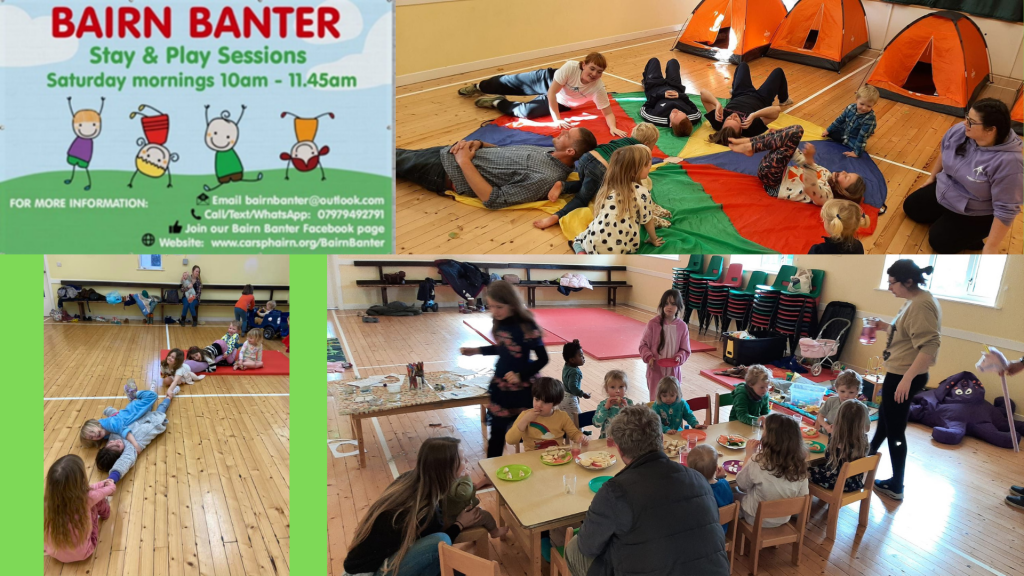
We arrived early at Lagwyne Hall in Carsphairn, a spacious hall with plenty of light. While also engaging her own young children, Melissa was setting up equipment to provide a range of activities, exercise and learning opportunities at the stay and play group, Bairn Banter. And we got to see the lovely snack box that had come from the local Galloway Food Hub – healthy, locally grown, organic snacks.
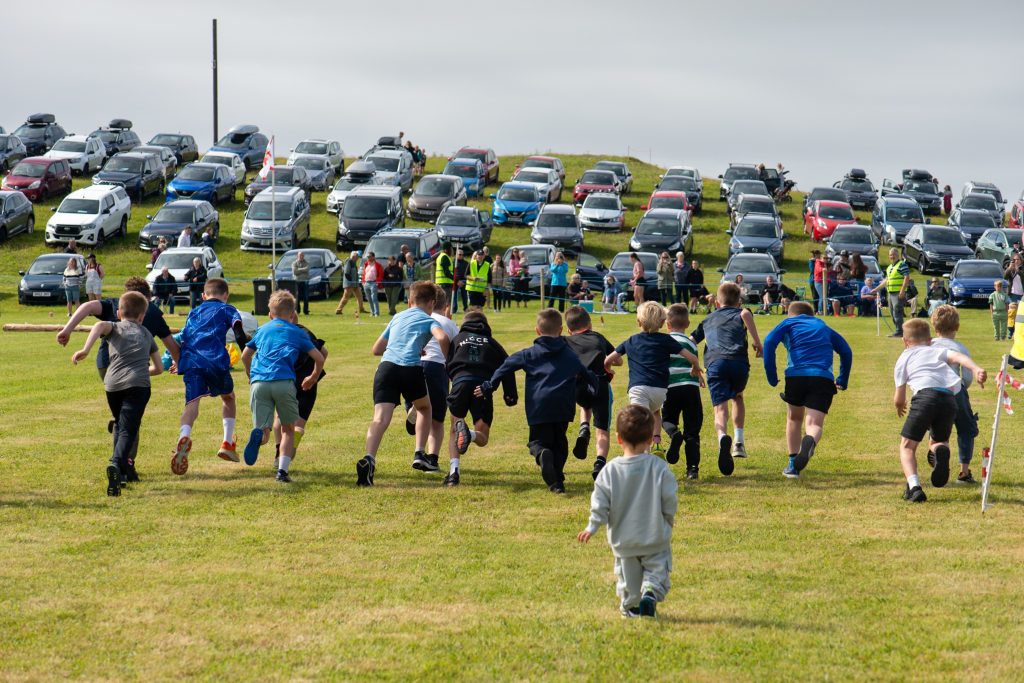
It wasn’t long before families started arriving for the weekly Saturday session: 14 children and 11 adults that week. A few of the adults came early to have a quick discussion with Melissa and others about community work. And from 10 o’clock the play and the banter among the children and the parents, carers and grandparents was in full swing.
In talking with the families, what struck us most was the diversity of those who had grown up in the local area of Glenkens, returned or moved there recently, and the obvious connection among them, with small groups of activity or chatting in different parts of the hall. There were plenty of Dads as well as Mums.
We heard stories about the reasons they were there in the Glenkens, from those who had settled recently in the area, to a child back from Austalia (where their parents had emigrated) visiting their grandparents. The benefits and opportunities for individuals and families, as well as the challenges.
So often we hear of the importance of jobs for retaining and growing population in rural and island communities. But nurturing connections and social opportunities are as important, which help to develop community networks, support and resilience, as well as identity and belonging. And for young children positive social interaction is critical for their development. Bairn Banter is making a vital contribution on all these fronts.
Sadly, Carsphairn has not been helped by the mothballing of their primary school. The loss of a local school can be a real blow to the sustainability of a local community: schools are often the very heart of a community. And by mothballing, rather than actually closing the school, the local authority avoided any consultation with the community about the impacts of this decision, on children, families, the community.
Melissa explains, “As the country emerged out of the Covid-19 pandemic in 2021, which caused a detrimental effect on rural communities and young families, it was felt by many local parents and grandparents that there was a lack of social opportunities within the local area for pre-school children. Carsphairn also suffered within the same year with the mothballing of the local primary school, which severed vital connections for young children within the parish. Coupled with the on-going cost of living crisis, social situations seemed to ‘dissolve’ and many young children begun to struggle without their vital socialising needs being met.”
Public policy that is built on managing decline rather than investing in the future is deeply damaging to so many rural and island communities. This is in spite of so much evidence now that people, especially young people, have different aspirations, for whom rural and island living and working has many attractions … but not without a local school or other services.
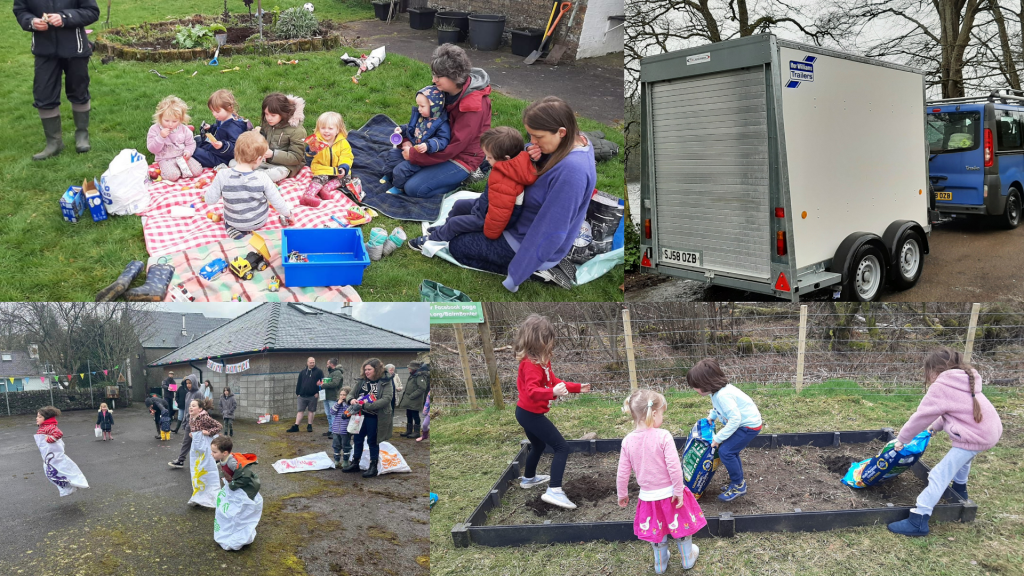
Beyond organising the weekly sessions, which are of course at the core of Bairn Banter’s work, the group is determined to do much more. A small amount of project funding, quickly matched from funding from the local windfarm, has enabled Bairn Banter to purchase a trailer just now to take the opportunities Bairn Banter deliver elsewhere in the Glenkens (they are currently the only pre-school/children’s group operating in the area). The word is out there in the community that Bairn Banter have the opportunity to be mobile, and the first event is already booked for June 1st.
With the determination to promote the Glenkens as a great place to live and work, the group is now awaiting quotes from artists to design and decorate the trailer with a unique mural to help promote Bairn Banter and other aspects of the local area such as farming, renewable energy, local community initiatives, etc. Bairn Banter hopes that when the trailer is ‘on tour’, people will be drawn to the attractive display and perhaps be encouraged to visit and indeed, down the line, settle in the area.
The trailer will allow Bairn Banter to offer more outdoor learning opportunities for children, young people and their families, and connect communities together within the beautiful outdoor environment. In doing so, they are delivering on the Scottish Government’s commitment, made in Scotland’s National Outdoor Play & Learning Position Statement, to value and expand opportunities for playing and learning outdoors.
Melissa is already working towards achieving a Level 3 Forest School Leader qualification by September this year. The trailer will become Bairn Banter’s ‘mobile welfare base’ as well as vital storage of equipment such as waterproofs, water, tools, safety equipment, etc., whilst travelling to areas of the Glenkens, especially outdoors, for example in woodlands.
Bairn Banter has enabled many young families, including those who have moved into the area, to meet socially on a regular basis, to enable children and families to socialise with each other, a critical investment for the future population, economy and community in the area.
“I have now been coordinating Bairn Banter since June 2021, and over this time span, I have met a wonderful selection of families from many walks of life. Both me and my children have developed some long lasting friendships. Given the current absence of the local mothballed school and the damaging after effects on social and emotional well being from the Covid 19 pandemic, many families have been left feeling socially vulnerable and isolated, as they struggled to meet these essential needs to socialise, and develop vital attachments/social relationships with other peers. I feel confident that Bairn Banter has provided this community need as we continue to provide a consistent, warm, safe, comfortable play space for these families to attend weekly, without the restrictive ‘barriers’ of an entry fee. Our volunteer run group also ensures that the children and their parents/carers are offered a nutritional snack during the session, as a ‘means’ to support healthy eating amongst children, and to help with the on-going cost of living crisis and food poverty issues which many families face at present. Bairn Banter welcomes all ages to attend, and we all have lots of fun indoor and out every Saturday morning. I look forward to this essential, fun little group growing into the future, including with the new trailer.”
Melissa Ade
Bairn Banter is another example of great things being delivered in rural and island communities by energetic and committed volunteers, in this case a group of dedicated parents led by the intense investment of time and energy by Melissa and her family. This is all part of community resilience and cohesion, but exacts a significant toll on rural and island people. Dependency on volunteering also limits how much communities can do. Funding to pay some hours to volunteers who deliver on so many Scottish Government priorities could have a dramatic impact on services and cohesion within rural and island communities, and invest in their long-term demographic, social, cultural and economic future.
All the actions supported under the ‘Community Action in Uist and Glenkens’ project clearly demonstrate how even small amounts of funding for locally rooted community intiatives can trigger significant action: the returns on the investment are large when communities are enabled to deliver on their priorities, what they are passionate about.
This was demonstrated so clearly in practice during the pandemic, but since then funding has often reverted back to the much more highly controlled and outcome-driven processes, with outcomes so often determined by distant policy-makers or funders, rather than by communities themselves.
The recent Addressing Depopulation Action Plan (2024) “endorses the importance of local leadership and seeks to exemplify the maxim ‘local by default, national by agreement’. We know that a place-based approach to applying national, regional, and local policies will be essential to sustainably and effectively address depopulation.”
Indeed.
To find out more about Bairn Banter, read this casestudy.
We thank all our partners, and the funder Scottish Rural Network, in this project on “Community Actions in Uist & Glenkens”. The views expressed in this blog post are our own.