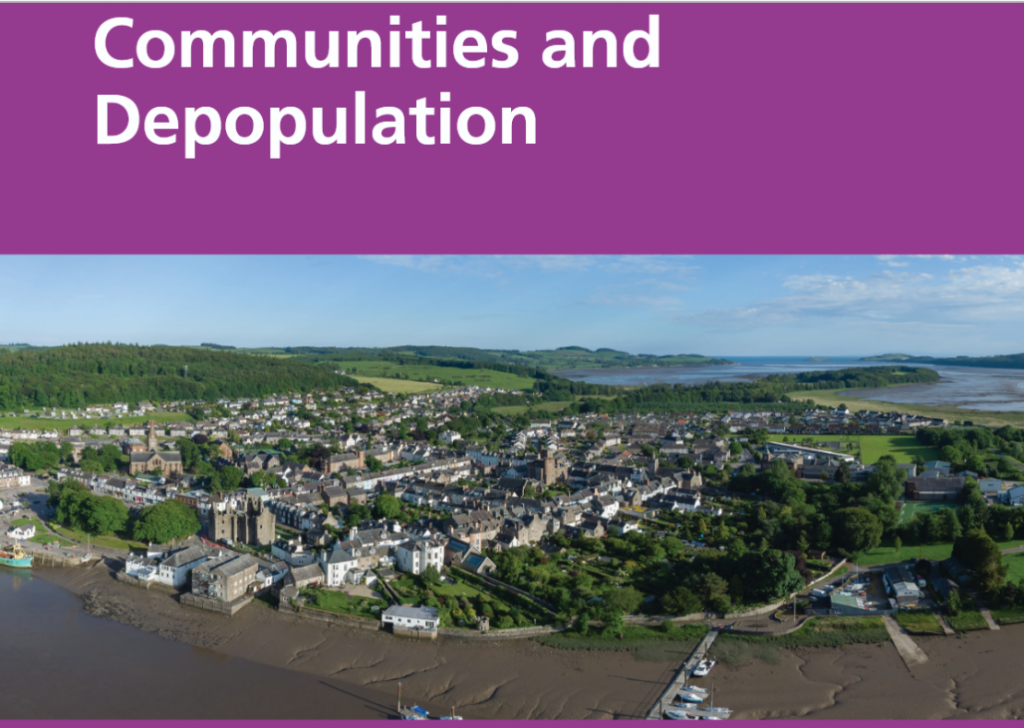
Our reports on addressing rural depopulation in Dumfries and Galloway (D&G), commissioned by the local authority, are now available. Read here for all the detailed analysis and many diverse casestudies from D&G, Scotland and Europe. And, from p.67 of the report, you can find the highlights, conclusions and above all 26 recommendations that could collectively achieve rural repopulation within the region.
“What a robust and detailed body of work – chapeau! It makes for compelling reading.” (Andrew McConnell, Chief Executive of the Glenkens Community and Arts Trust).
The authors, Thomas Fisher and Theona Morrison, write that “three clear conclusions on interventions emerged from the research. First, it is possible, however challenging, to halt and even reverse rural depopulation, as demonstrated by areas across Europe (e.g. in Catalonia) and in Scotland, for example in some Scottish islands and some places in D&G itself, where some small towns in the east of the region, as well as Gatehouse of Fleet and Sandhead have experienced population growth.
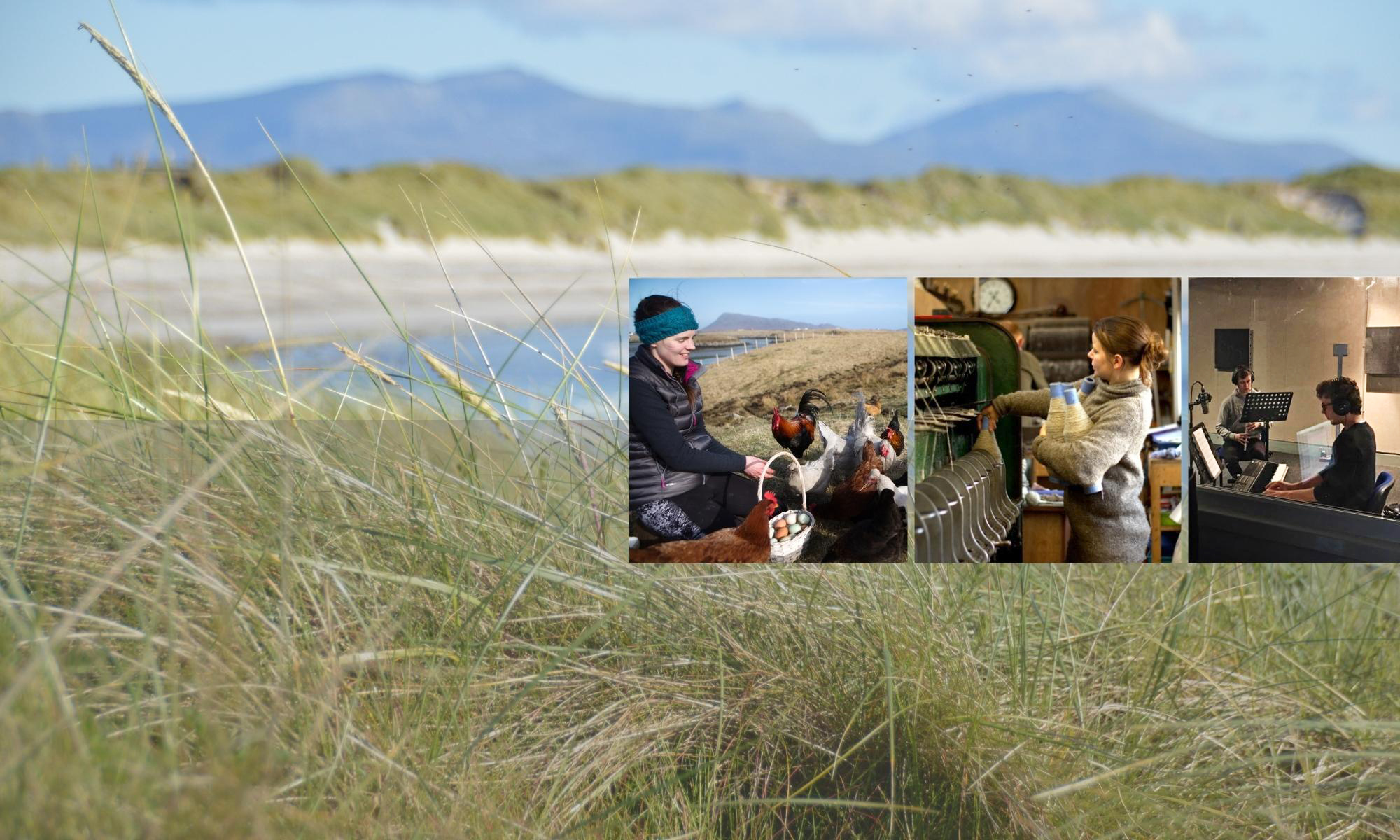
“We also identified specific groups that are contributing to sustaining rural populations, like young farmers returning to their family farms, engaging in food production and often also working in key services like health and education, and so-called “Alternative-Lifers”, who have long been moving into the region, often with young families, who have boosted local population, enterprise and community activity.
“Second, there are a plethora of potential interventions to address depopulation within D&G, and we highlight many of these in the report. And, third, these strategies can build on the many assets, strengths and good practices already within the region.”
“It is also important to highlight the reasons for investing resources to retain and attract population to rural areas in D&G. First, the region is almost entirely rural, and rural people have the same rights to live well as citizens anywhere else. Second, according to the OECD, “rural regions and the people who live in them, are the source of almost all the food, fresh water, energy, minerals and other resources that make our way of life possible”. D&G is a key contributor to Scotland’s larder (e.g. with 25% of Scotland’s cattle herd), and rural people are key to regenerating that land to achieve more sustainable, regenerative, and local food production. Rural communities remain the custodians of much of the world’s biodiversity, and of related understanding and cultural assets critical for our survival, amidst the twin climate and biodiversity emergencies. Finally, there is the economic contribution of rural areas. On top of all the resources listed above, rural areas accounted for most of the firm-level productivity growth in Scotland from 2010 to 2018, according to the OECD. In fact, remote areas alone accounted for 81.6% of total productivity growth!”
Rural communities must be at the heart of any actions and policy for rural repopulation, and the report, by University of the West of Scotland and CoDeL, based on extensive engagement with three communities in D&G, is here. The three communities were the Glenkens (“remote” rural), Newton Stewart (rural town) and the Rhins (coastal). The report focuses in particular on the role of family and community relations as key to shaping young people’s positive perceptions of rural living, and calls for addressing inequalities in accessing key services in rural places through more holistic approaches.