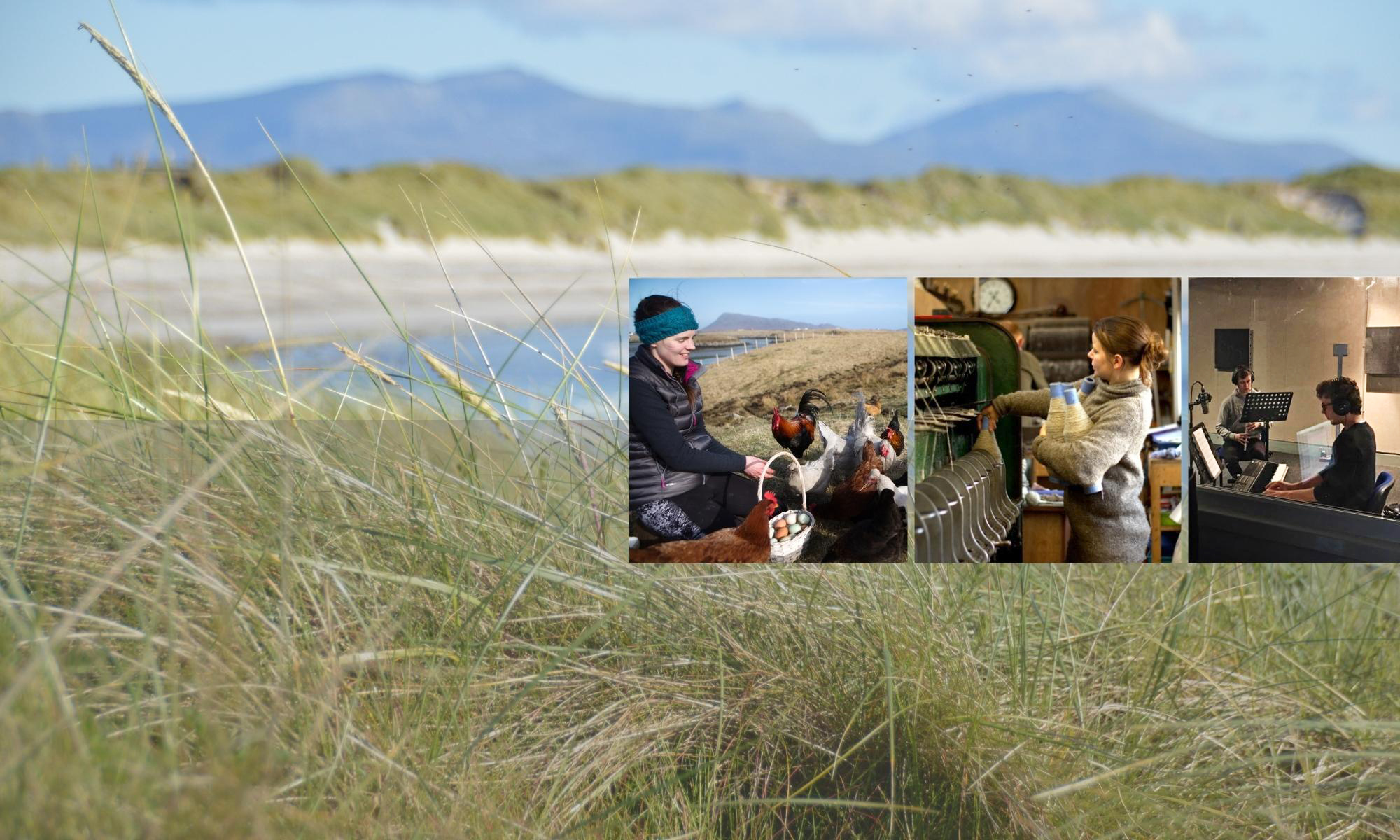
“Policymaking in parts of Scotland has not led to a transformative change in the realities of rural and island life”, according to participants at an event in Skye last autumn. The report from the event, released this week by the Royal Society of Edinburgh and CoDeL, seeks to provide answers as to why, and what could bring about genuine change, focusing on the role of research that underpins policymaking.
The report urges policymakers, funders, and research institutions to better recognise, resource and support the knowledge already held within communities. Communities are repositories of ancestral and modern knowledge shaped by lived experience and inherited understanding.
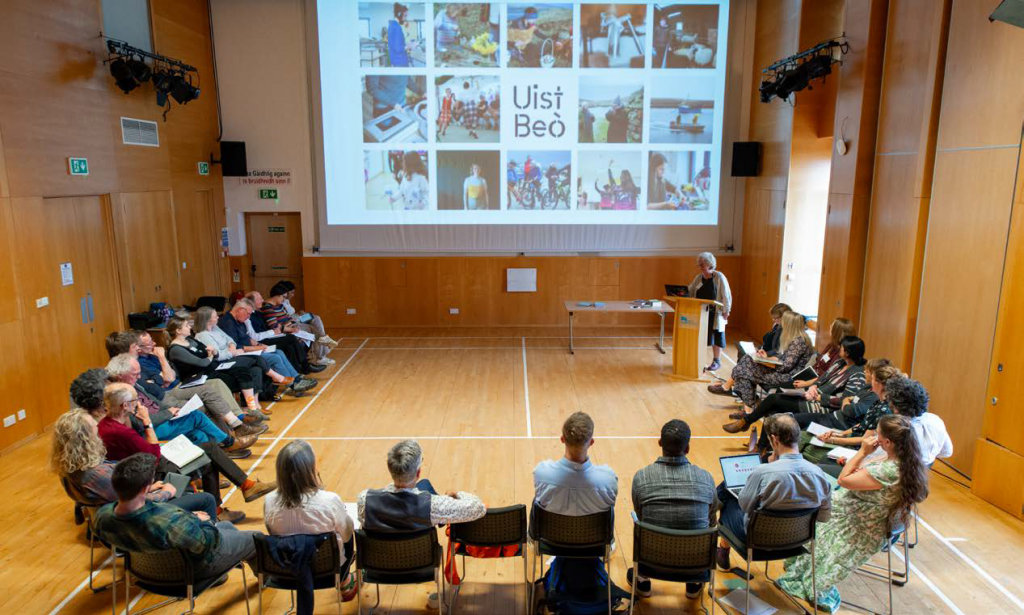
Gathering at Sabhal Mòr Ostaig, the Gàidhlig college in the Isle of Skye mattered as a location. Being immersed in a place rooted in language, culture, and local knowledge shaped how people listened, spoke, and thought – reinforcing the idea that where research happens shapes what research becomes.
The report is available here and on the RSE website here. A ‘story’ overview of the process and key findings is here.
Co-designing and co-delivering research with communities gives access to vital evidence on the ground, often missed by standard external research methodologies. So genuine partnership with communities provides a better evidence base, higher quality research outcomes and, hence, better policy recommendations. Moverover, because communities are at the core of such research, they can contribute to implementing recommendations, enhancing the impacts of research and policy.
Superior evidence, better recommendations, greater impacts.
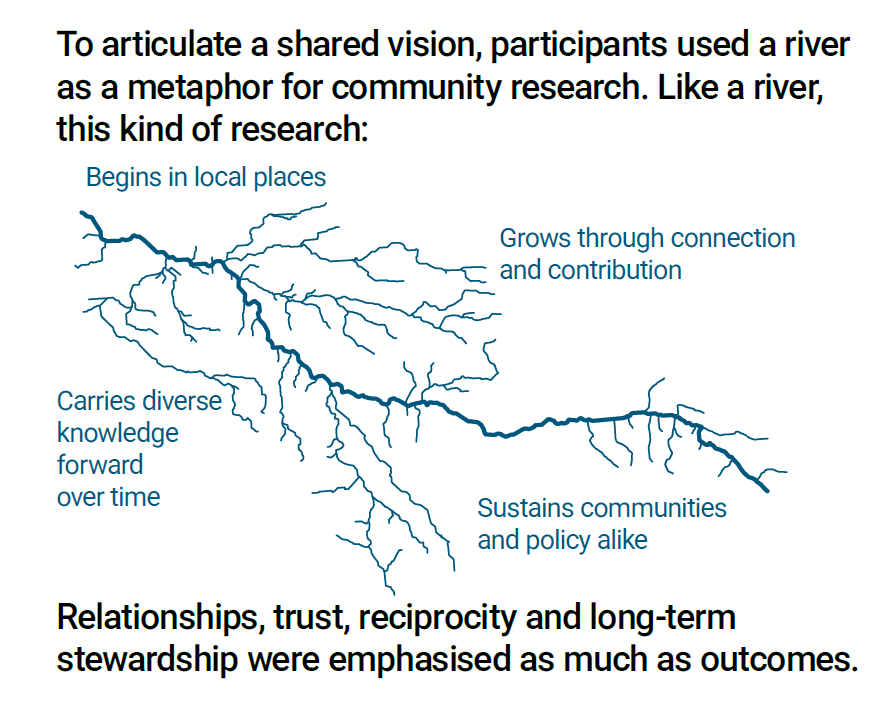
Community‑rooted research starts from recognising communities as knowledge holders. It responds directly to needs identified by communities themselves. It is embedded in local action, culture, history and place. It values lived, inherited, and embodied knowledge, including stories, language, memory, art, and creative practice, alongside more conventional research methods.
“Research embedded in reciprocal relations embraces such local knowledge(s), experience, and understanding of community culture, recognising and valuing that communities are “brimming with insights, skills, experiences, ambitions.” Research must thus be grounded in a deep understanding of language and culture in close-knit communities, as well as of community needs and aspirations.”
Crucially, community-rooted research is owned, shaped and accountable to communities.
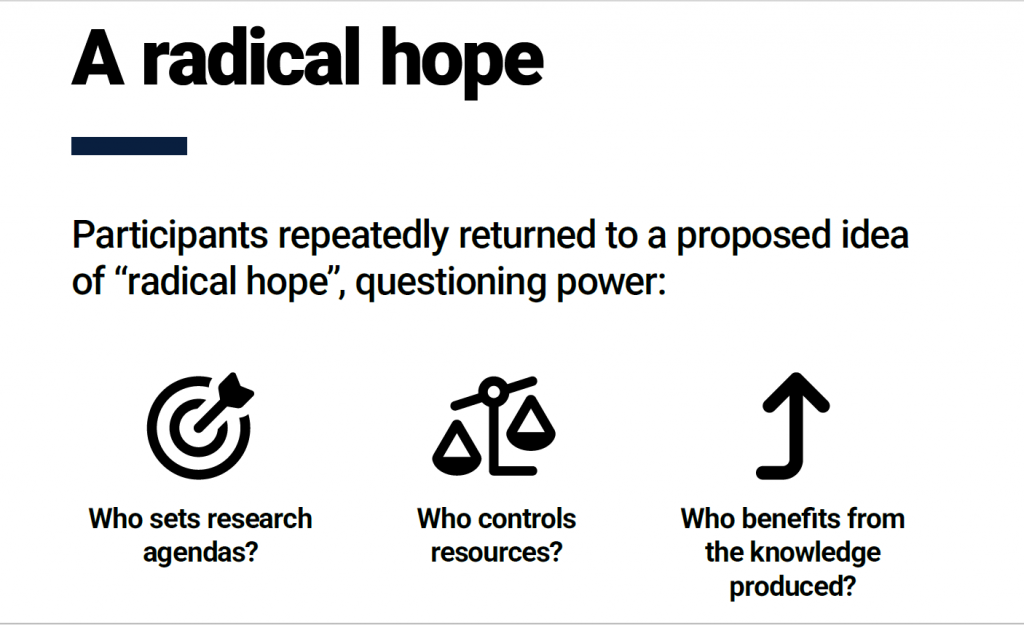
To thrive, this kind of research needs supportive structures. Funding models should empower communities to define research agendas, deliver research, and control the narratives about their own contexts.
Two concepts at the core of our thinking are how extractive research methodologies can be (“communities have long experienced research and policy collecting data about them rather than knowledge created with them.”) and how powerful external language and frameworks can be in excluding and distorting local voices.
“Participants emphasised the need to ground different types of research in deep reciprocity and respect for communities to ensure research is collaborative rather than extractive. Rather than being filtered or interpreted through externally designed frameworks and language alien to communities and their deeply held cultural knowledge, community-rooted research draws on the knowledge and voices of local people, and is already changing narratives and influencing policy, from local to national.”
“Research should not seek to frame deeply held cultural knowledge within a generic linguistic framework used in research institutions, that is often alien to those from communities participating in the research.”
Genuine partnerships of equality in research must be based on deep reciprocity and respect. And they must involve the sharing of financial resources, rather than the failed and extractive approaches of “community consultation” and “community engagement”.